



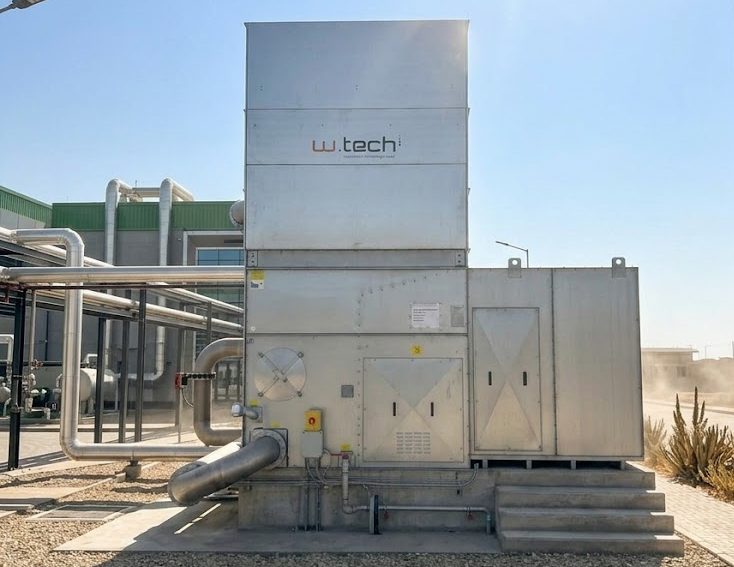
In recent years, summer has become synonymous with a complex challenge for those who manage industrial and chemical plants or HVAC systems. Increasingly frequent and prolonged heat waves, with temperatures consistently exceeding 40°C, are putting a severe strain onindustrial thermal efficiency and traditional heat dissipation systems.
The problem is structural: many plants were designed for climatic conditions that simply no longer exist today. When the mercury rises, the choice of system used by the plant to “discharge” heat makes all the difference in the world between uninterrupted production and a shutdown due to high pressure or temperature.
Heating System Design: The Old Standard vs. Today’s Climate Reality
For many years, the standard design of air-cooled condensing systems in Europe was based on estimated external temperature peaks of around 30 / 35°C . A margin that, at the time, seemed largely safe.
Today, this scenario has been superseded by climate change. Continuing to design based on old standards means accepting an extremely high risk of vulnerability precisely at the time of peak energy and production demand. When the outdoor air temperature rises, the refrigerant’s condensation temperature inevitably increases as well, causing:
- An immediate increase in electricity consumption.
- A drastic decrease in the system’s COP (Coefficient of Performance).
- Increase in operating pressures and a corresponding decrease in cooling capacity.
- Increased risk of unplanned machine downtime and plant shutdowns.
In short: just when the cooling system is required to operate at full capacity, it becomes less efficient.
Refrigerants and Ammonia Systems: Technical Aggravating Factors
The thermal bottleneck is not only related to the weather, but is also exacerbated by technological advancements and strict environmental regulations on greenhouse gases.
The Challenge of New Low-GWP Refrigerants
The ecological transition has necessitated the adoption of new refrigerants, which often have a significant thermal glide (around 20 K). This phenomenon significantly increases condensation temperatures and pressures, making thermal management during the summer even more critical.
Why Ammonia Refrigeration Systems Struggle in Hot Weather
Ammonia is one of the most efficient and sustainable natural refrigerants, but it is extremely susceptible to air condensation. When outdoor temperatures exceed 35°C, internal pressures rise rapidly to critical levels. To prevent safety systems from triggering, many industrial plants are forced to drastically cut cooling capacity, reducing company productivity precisely when the demand for cooling peaks.
Cooling Towers vs. Air-Cooled Condensation: The Physics of the Wet Bulb
To understand how to save the system and optimize energy efficiency, we need to analyze thermodynamic physics and the difference between two parameters:
- Dry-bulb temperature: This is the normal ambient temperature measured by a thermometer. Air-cooled condensers depend solely on this temperature. If the outside temperature is 40°C, the system will operate at extremely high condensing temperatures, causing energy consumption to skyrocket.
- Wet-bulb temperature: This is the thermal parameter on which evaporative cooling towers and adiabatic coolers operate, utilizing the physical principle of water evaporation.
Herein lies the key: in Italy, even on the most sweltering and scorching summer days, the wet-bulb temperature rarely exceeds 24°C–26°C.
During the recent record-breaking heat waves, W-TECH technicians conducted illustrative field measurements in the Bologna area: while traditional thermometers recorded ambient temperatures close to 40°C (dry-bulb), the wet-bulb temperature monitored by the evaporative systems never exceeded 25°C.
W-TECH Solutions: Evaporative Towers and Adiabatic Systems to Ensure Business Continuity
By changing the rules of the game and eliminating direct dependence on dry air through the use of recirculated water, the system is virtually insulated from summer heat peaks.
The operational and economic benefits of this temperature difference translate into concrete business advantages:
- Consistent cooling performance: condensation always occurs at the optimal temperature, and a high COP is maintained even during heat waves.
- Production continuity: elimination of the risks of machine downtime, production losses, and deterioration in industrial process quality.
- Energy savings: standard and stable electricity consumption, without overloads that could damage the compressors.
- Sustainability and durability: reduced wear and tear on industrial equipment and full compliance with energy-saving regulations.
Today, designing a system means looking ahead to the climate of tomorrow. Investing in advanced cooling towers or adiabatic solutions is no longer just a technical consideration, but a true strategic decision to safeguard business continuity.
Optimize Your Company’s Thermal Efficiency
Don’t let the next heat wave catch you off guard. At W-TECH, we design industrial cooling systems capable of delivering high performance, efficiency, and reliability—even when it’s 40°C outside.
IS YOUR SYSTEM READY TO HANDLE EXTREME HEAT?
W-TECH’s technicians are available to analyze your system and identify the most efficient cooling solution to ensure uninterrupted production, reduce energy consumption, and maintain high performance even during heat waves.



