



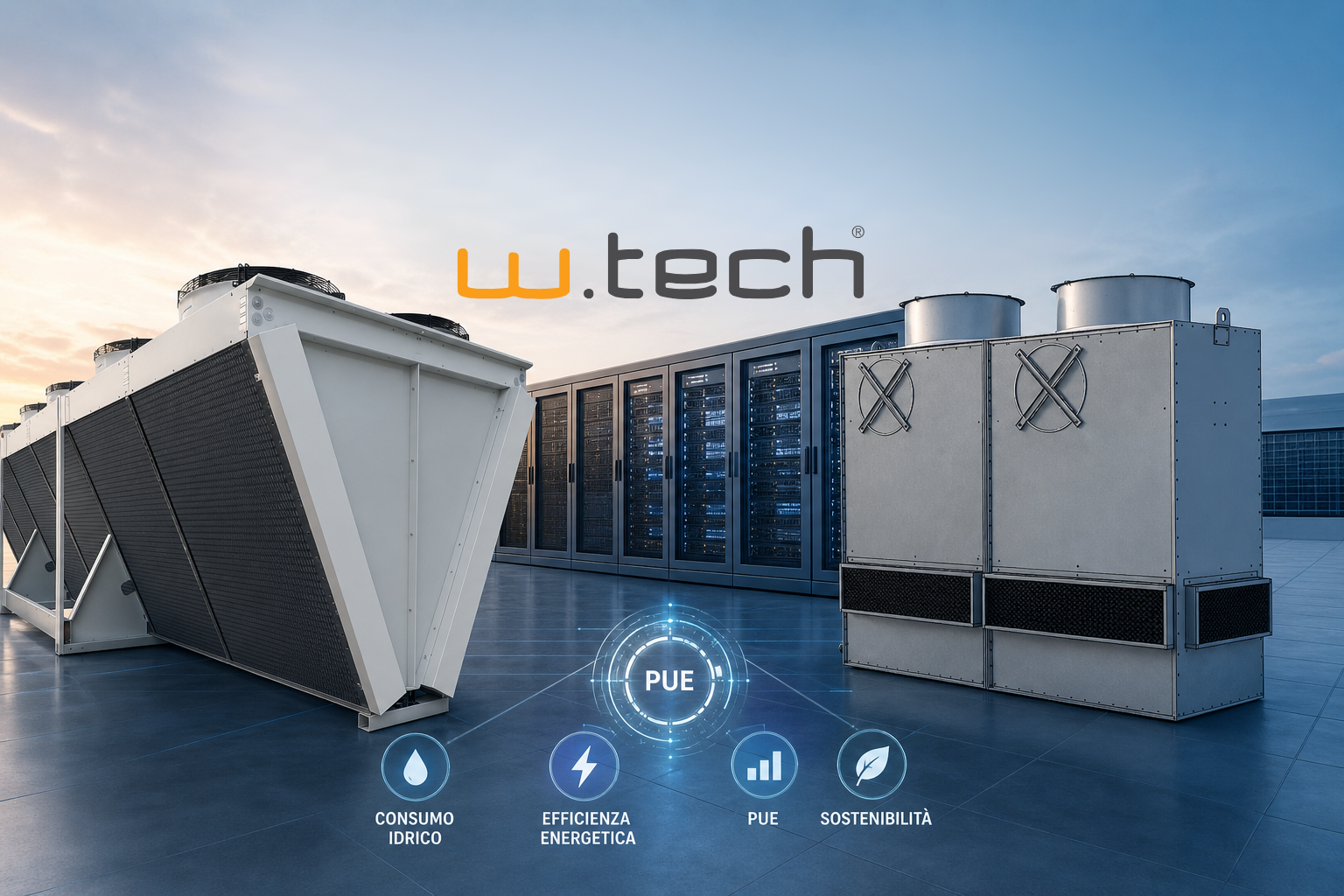
In the industrial cooling and data center sector, the choice of technology is never neutral: it directly affects energy efficiency, water consumption, and, above all, PUE (Power Usage Effectiveness), one of the key indicators for assessing a facility’s overall performance.
Among the most common solutions for cooling large heat loads are evaporative towers and dry coolers. Both technologies are effective, but they are designed to meet different requirements.
What is PUE and why is it so important
PUE is the ratio of the total energy consumed by a plant to that actually used by IT or process systems.
In formula:

The closer the value is to 1, the higher the energy efficiency of the system.
The cooling system crucially affects this parameter, making it a strategic element in the design.
Evaporative towers: maximum thermal efficiency
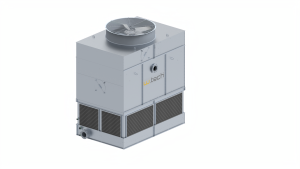
Evaporative towers use the natural principle of water evaporation to dissipate heat. They are among the most thermodynamically efficient solutions.
Main benefits:
- very high thermal disposal capacity
- Low energy consumption (only fans and pumps)
- excellent efficiency in hot climates and high loads
- PUE reduction in industrial and data center applications
Limits:
- higher water consumption
- water treatment needs
- More frequent maintenance in aggressive environments
Dry cooler: hybrid efficiency and consumption control
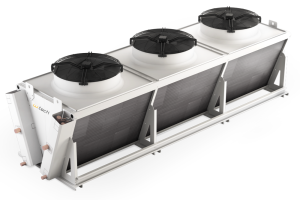
Adiabatic coolers combine air cooling with water evaporation only when necessary. Water is used intermittently to pre-cool the air entering the exchangers, normally during summer periods.
Main benefits:
- Significant reduction in water consumption
- predominantly “dry” operation
- Lower risk of scaling and chemical treatments
- Excellent control of annual water consumption
Limits:
- Lower thermal efficiency than evaporative towers under extreme conditions
- Increased dependence on weather conditions
- Possible increase in peak load power consumption
Technical comparison: efficiency vs consumption
| Feature | Evaporative towers | Dry cooler |
| Thermal efficiency | Very high | High |
| Water consumption | Higher | Reduced |
| Energy consumption | Low | Variable |
| Performance in high loads | Excellent | Good |
| Impact on PUE | Very favorable | Good, but dependent on climate |
How to choose the right technology
The choice between evaporative towers and adiabatic coolers is not universal, but depends on a number of design factors:
- thermal load profile
- annual hours of operation
- availability and cost of water
- site climatic conditions
- PUE and sustainability (ESG) goals.
- plant maintenance and management constraints
In many cases, the optimal solution is not an “either/or” choice, but an integrated design that combines the two technologies according to actual loads.
The role of the consulting engineer: beyond the mere provider
Optimizing PUE does not mean choosing the most efficient product on paper, but designing the most balanced system for the plant life cycle.
For this reason, the role of the technology partner is crucial: load analysis, energy simulations and How to choose the right technology
The choice between evaporative towers and adiabatic coolers is not universal, but depends on a number of design factors:
- thermal load profile
- annual hours of operation
- availability and cost of water
- site climatic conditions
- PUE and sustainability (ESG) goals.
- plant maintenance and management constraints
In many cases, the optimal solution is not an “either/or” choice, but an integrated design that combines the two technologies according to actual loads.
Conclusions
Evaporative towers and adiabatic coolers are not competing solutions, but complementary technologies that address different needs.
True PUE optimization comes from the design of the system as a whole, not from the individual machine.
Do you want to optimize the PUE of your plant?
The W-Tech technical team can support you in selecting and configuring the most efficient cooling system for your specific operating profile.



